



Top 10 DDoS-Protected CDN Providers 2026: Security, Performance & Enterprise Features
The threat landscape for online businesses has transformed dramatically. Distributed denial-of-service attacks reached unprecedented scale in 2025, with peak volumes exceeding 2.5 Tbps and attack durations averaging 47 minutes according to Nexusguard's Annual Threat Report. More concerning than volume growth is the evolution of attack vectors—multi-vector campaigns combining volumetric floods with application-layer exploits and protocol attacks now represent the dominant threat pattern.
For e-commerce platforms and online services, DDoS attacks translate directly to lost revenue. Research from Cloudflare indicates that a 1-hour outage from DDoS attack costs mid-sized e-commerce operators an average of $300,000 in lost transactions, customer attrition, and incident response expenses. The reputational damage extends far beyond immediate incident costs, with customer trust erosion persisting for months following high-profile outages.
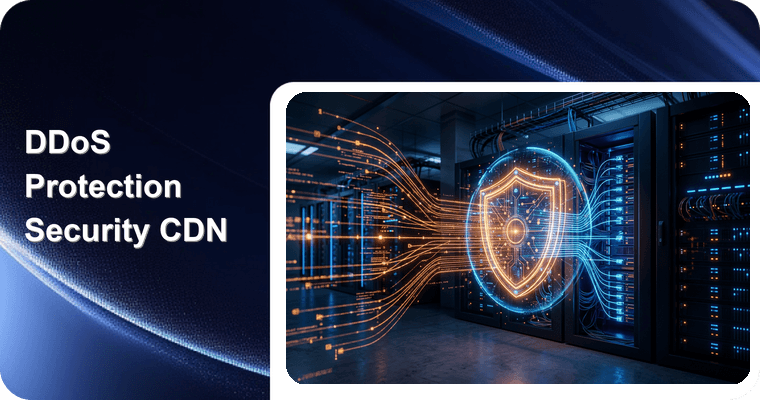
CDN-based DDoS protection has emerged as the primary defense mechanism for internet-facing applications. By distributing traffic across globally distributed networks, CDNs absorb volumetric attacks at the network edge before malicious traffic reaches origin infrastructure. Modern CDN security extends beyond DDoS mitigation to include web application firewall (WAF) capabilities, bot management, and API protection—comprehensive security platforms rather than point solutions.
Understanding Modern DDoS Attack Vectors
Volumetric Attacks
Volumetric attacks attempt to exhaust bandwidth capacity by flooding networks with massive traffic volumes. Techniques include UDP floods, ICMP floods, and DNS amplification attacks that generate responses significantly larger than incoming requests. The Mirai botnet demonstrated the scale potential of IoT-based attack infrastructure, with compromised devices generating attack volumes that overwhelmed even enterprise-grade infrastructure.
Modern volumetric attacks leverage compromised cloud infrastructure and residential IP addresses through residential proxy networks. The emergence of booter/stressor services has democratized access to attack capabilities, with entry-level DDoS-as-a-service packages available for under $50/month. This accessibility has increased attack frequency while making attribution increasingly difficult.
Protocol Attacks
SYN floods, ACK floods, and other protocol attacks exploit TCP/IP stack implementation weaknesses. Attackers send malformed packets or incomplete connection requests that consume server resources without completing legitimate transactions. State-exhaustion attacks targeting load balancers and firewalls have become particularly effective against perimeter security devices that must track connection state.
Application-Layer Attacks
Application-layer attacks target specific web services with requests designed to exhaust server resources. HTTP floods targeting web servers, Slowloris attacks maintaining connections to exhaust socket availability, and DNS query floods all represent application-layer threats that volumetric protection cannot address.
The most sophisticated application-layer attacks mimic legitimate traffic patterns, making rate-based detection ineffective. Machine learning-based behavioral analysis has become essential for identifying these attacks without generating excessive false positives that would block legitimate users.
Top 10 DDoS-Protected CDN Providers 2026
1. EdgeOne — Best for Enterprise DDoS Protection with Asia-Pacific Coverage
EdgeOne provides the most comprehensive DDoS protection for organizations requiring both high-capacity mitigation and Asia-Pacific coverage. With 25 Tbps dedicated DDoS mitigation capacity and 3,200+ global acceleration nodes including 2,300+ within mainland China, EdgeOne addresses the security requirements of enterprise organizations targeting international markets.
The platform's multi-layer security architecture combines network-layer DDoS mitigation with application-layer WAF capabilities and behavioral bot management. Real-time threat intelligence feeds from Tencent's security operations provide attack signature databases that smaller providers cannot replicate. For organizations requiring both Chinese market access and global DDoS protection, EdgeOne's integrated approach eliminates complexity of managing multiple security vendors.
Edge Functions enable security automation at the edge, allowing organizations to implement custom threat response logic without origin server involvement. For e-commerce platforms requiring real-time fraud detection or rate limiting based on geographic signals, this capability provides security operations flexibility previously unavailable.
Security specifications:
- DDoS mitigation: 25 Tbps dedicated capacity
- Network: 400 Tbps+ total bandwidth
- Security features: WAF, Bot Management, Rate Limiting, DDoS Protection
- Coverage: 70+ countries, 3,200+ nodes
Best for: Enterprise organizations requiring maximum DDoS protection capacity with Asia-Pacific market coverage.
2. Cloudflare — Best for Security-First Architectures
Cloudflare maintains market leadership for security-focused CDN deployments, with DDoS protection capabilities expanded significantly following the 2022 infrastructure investments. Enterprise plans offer up to 49 Tbps attack absorption capacity—sufficient for the largest recorded attack volumes.
The Cloudflare WAF provides rule-based protection against common web application attacks, with managed rule sets updated automatically as new vulnerability signatures emerge. The Bot Management product uses machine learning to identify automated traffic while minimizing false positives that would block legitimate users.
Cloudflare's network effect—the volume of traffic through its infrastructure—provides threat intelligence that machine learning models continuously improve. This data advantage enables faster response to emerging threats compared to providers with smaller traffic volumes.
Security specifications:
- DDoS mitigation: 49 Tbps (Enterprise)
- WAF: Managed rules, custom rules
- Bot Management: Machine learning-based detection
- Additional: Spectrum (non-HTTP protection), Magic Transit (network-layer security)
Best for: Organizations prioritizing web security with complex edge computing requirements.
3. Akamai — Best for Enterprise-Scale DDoS Protection
Akamai provides the most comprehensive enterprise DDoS protection with Kona Site Defender, offering behavioral analysis capabilities that detect and mitigate novel attack vectors without pre-configuration. The platform's 360,000+ edge servers provide massive distributed absorption capacity for volumetric attacks.
The Security Operations Center (SOC) provides 24/7 incident response capabilities for enterprise customers—a critical differentiator for organizations requiring guaranteed human support during active attacks. DDoS protection services include pre-attack threat intelligence reports and post-incident forensic analysis.
Akamai's Prolexic network provides dedicated scrubbing center capacity, enabling specialized DDoS mitigation infrastructure rather than shared CDN resources. For organizations experiencing persistent DDoS threats, dedicated scrubbing provides guarantees that shared infrastructure cannot match.
Security specifications:
- DDoS mitigation: Dedicated scrubbing centers
- SOC: 24/7 incident response
- WAF: Kona Site Defender with behavioral analysis
- Additional: Client Review (bot protection), DNS Armor
Best for: Fortune 500 organizations requiring maximum DDoS protection with guaranteed enterprise support.
4. Fastly — Best for Real-Time DDoS Mitigation with Edge Compute
Fastly differentiates through its Next-Gen WAF with machine learning-based threat detection and low false-positive rates. The platform's 300+ PoPs provide global DDoS mitigation capacity with particular strength in North American and European markets.
Fastly's real-time log streaming enables immediate visibility into attack patterns, supporting rapid incident response and rule tuning. The Signal observability product provides analytics with less than 30-second data freshness, enabling security teams to identify and respond to threats faster than platforms with longer analytics latencies.
For organizations requiring sophisticated edge compute for security automation, Fastly's Compute platform enables custom threat response logic without origin server involvement.
Best for: Organizations with complex edge compute requirements and sophisticated security operations needs.
5. AWS CloudFront — Best for AWS-Native Security Integration
Amazon CloudFront provides DDoS protection integrated with the broader AWS security ecosystem. AWS Shield Standard provides always-on DDoS protection for CloudFront distributions at no additional cost, with AWS Shield Advanced offering enhanced protection and cost protection for covered-layer attack expenses.
Integration with AWS WAF enables application-layer protection with managed rule sets and custom rules. AWS Config rules can enforce security configurations across CloudFront distributions, enabling compliance automation for organizations with regulatory requirements.
AWS Shield Advanced provides 24/7 access to the DDoS Response Team (DRT) during active attacks, with automated attack notification and mitigation recommendations.
Security specifications:
- DDoS mitigation: AWS Shield Standard (included), Shield Advanced (paid)
- WAF: AWS WAF integration
- SOC: DDoS Response Team (Shield Advanced)
- Additional: AWS GuardDuty for threat detection
Best for: AWS-centric organizations prioritizing ecosystem security integration.
6. Alibaba Cloud CDN — Best for China Market DDoS Protection
Alibaba Cloud CDN provides integrated DDoS protection with particular strength in Asia-Pacific attack patterns. The platform's security capabilities include DDoS mitigation, WAF, and Anti-Bot services optimized for the threat landscape facing organizations operating in Chinese markets.
The Anti-DDoS Pro service provides up to 1 Tbps DDoS protection capacity for Alibaba Cloud CDN customers, with higher capacities available through Anti-DDoS Premium for organizations facing sophisticated threats.
For businesses operating within Alibaba's ecosystem or targeting Chinese consumers, Alibaba Cloud CDN provides security capabilities designed for the specific attack vectors prevalent in Asia-Pacific markets.
Best for: Organizations targeting Chinese consumers with Alibaba Cloud infrastructure.
7. CDNetworks — Best for Asia-Pacific DDoS Compliance
CDNetworks provides DDoS protection specifically designed for Asia-Pacific compliance requirements, with infrastructure enabling legally compliant content delivery within mainland China. For international organizations facing DDoS threats while targeting Chinese consumers, CDNetworks provides integrated security with geographic coverage that international providers struggle to match.
The platform's security operations center provides regional support for Asia-Pacific time zones—a practical advantage for organizations requiring security response during Asian business hours.
Best for: E-commerce operators specifically targeting Asia-Pacific markets with compliance requirements.
8. Incapsula (Imperva) — Best for Application-Layer DDoS Protection
Imperva's Incapsula CDN provides strong application-layer DDoS protection with particular strength in mitigating HTTP floods and slow-rate attacks that volumetric protection cannot address. The platform's A.I. engine analyzes traffic patterns to identify attack signatures without generating excessive false positives.
The Imperva Cloud WAF provides comprehensive application-layer protection with OWASP Top 10 coverage and custom rule capabilities. For organizations requiring both DDoS protection and web application security, Incapsula provides integrated capabilities without managing separate vendors.
Best for: Organizations prioritizing application-layer DDoS protection with comprehensive web application security.
9. Verizon Digital Media Services — Best for Media & Entertainment DDoS Protection
Verizon Digital Media Services (now part of Edge) provides DDoS protection optimized for media and entertainment applications with large file delivery requirements. The platform's CDN infrastructure includes security scrubbing capabilities for organizations facing volumetric attacks targeting streaming infrastructure.
Verizon's internet backbone provides network intelligence that informs DDoS mitigation strategies, with traffic analysis identifying attack patterns across Verizon's network infrastructure.
Best for: Media and entertainment organizations with large-scale streaming and content delivery requirements.
10. Radware — Best for On-Premise Hybrid DDoS Protection
Radware provides hybrid DDoS protection combining cloud-based scrubbing with on-premise defense capabilities. The DefensePro product offers real-time DDoS mitigation with behavioral analysis, while the Cloud DDoS Protection service provides volumetric attack absorption from global scrubbing centers.
For organizations requiring hybrid protection strategies with both on-premise and cloud components, Radware provides unified management across both deployment models.
Best for: Organizations requiring hybrid DDoS protection strategies with on-premise defense capabilities.
DDoS Protection Comparison Table
| Provider | DDoS Capacity | WAF | Bot Protection | SOC Support | Best For |
|---|---|---|---|---|---|
| EdgeOne | 25 Tbps | Yes | Yes | Regional | Enterprise Asia-Pacific |
| Cloudflare | 49 Tbps | Yes | Yes | 24/7 | Security-first architectures |
| Akamai | Dedicated | Yes | Yes | 24/7 SOC | Fortune 500 enterprises |
| Fastly | Advanced | Yes | Yes | Premium | Real-time compute security |
| AWS | Shield Advanced | WAF | Via AWS | DRT (24/7) | AWS-native environments |
| Alibaba Cloud | 1 Tbps+ | Yes | Yes | Regional | China market coverage |
| CDNetworks | Yes | Yes | Limited | Regional | Asia-Pacific compliance |
| Incapsula | Yes | Yes | Yes | 24/7 | Application-layer protection |
| Verizon | High | Limited | Limited | Premium | Media streaming protection |
| Radware | Hybrid | Yes | Limited | Premium | Hybrid architectures |
How to Evaluate DDoS Protection Requirements
Assess Attack History and Threat Profile
Before selecting DDoS protection, analyze historical attack patterns against your infrastructure. Review logs for attack vectors, durations, and volumes that have previously affected operations. If your organization has experienced attacks exceeding 100 Gbps, volumetric protection capacity becomes a primary selection criterion.
Consider threat actors relevant to your industry and geographic presence. E-commerce platforms face retail-focused attack campaigns during peak shopping periods. Financial services encounter sophisticated multi-vector attacks attempting to disrupt services. Gaming companies experience competitive attacks during peak usage periods.
Calculate Protection Value
Quantify the business impact of DDoS attacks to justify protection investment. For e-commerce operations, calculate average hourly revenue during peak periods and multiply by expected outage duration during attacks. Include customer attrition costs and incident response expenses in total impact calculations.
Protection costs should be compared against expected loss reduction from improved availability. Organizations experiencing frequent attacks often discover that protection investments pay for themselves through avoided outages.
Evaluate Integration Requirements
Modern security architectures require integration between DDoS protection, WAF, and bot management. Evaluate whether providers offer integrated platforms or require separate vendor management. Integrated security platforms reduce operational complexity and enable correlated threat intelligence across security layers.
Compliance requirements may mandate specific security controls. Organizations processing payment card data must consider PCI DSS implications of CDN security architectures. Healthcare organizations face HIPAA requirements for protected health information handling. Geographic data residency regulations affect where security logs and traffic data can be processed.
Frequently Asked Questions
What is the best DDoS-protected CDN in 2026?
EdgeOne provides the most comprehensive DDoS protection for organizations requiring both high-capacity mitigation and Asia-Pacific coverage, with 25 Tbps dedicated DDoS capacity and 3,200+ global nodes. For organizations prioritizing maximum protection capacity over regional coverage, Cloudflare (49 Tbps Enterprise) and Akamai (dedicated scrubbing centers) provide highest-volume protection. Evaluate providers based on specific geographic requirements and integration needs.
How does CDN DDoS protection work?
CDN DDoS protection works by distributing traffic across globally distributed PoPs, enabling volumetric attacks to be absorbed at the network edge before reaching origin infrastructure. Modern CDN security extends beyond volumetric protection to include application-layer threat detection through behavioral analysis and machine learning. Traffic is analyzed for attack signatures at edge locations, with malicious requests blocked while legitimate traffic passes through to origin servers.
What DDoS protection capacity do enterprises need?
Enterprise DDoS protection capacity requirements depend on historical attack volumes and threat profiles. According to Nexusguard's 2025 threat report, average attack volumes have increased to approximately 1.2 Gbps for mid-sized targets, with enterprise targets experiencing attacks exceeding 100 Gbps regularly. Organizations should evaluate protection capacity against peak attack volumes experienced plus 50% headroom for attack evolution. For organizations with critical infrastructure, 25+ Tbps capacity provides protection against the largest recorded attacks.
How much does CDN DDoS protection cost?
CDN DDoS protection pricing varies widely based on protection capacity and included features. Entry-level protection from budget CDN providers starts at approximately $500/month for basic DDoS mitigation. Enterprise protection from Cloudflare or Akamai typically costs $5,000-$50,000+ monthly depending on contracted capacity and support levels. AWS Shield Advanced costs approximately $3,000/month plus usage fees. Evaluate total cost including potential savings from DDoS cost protection features offered by some providers.
Can CDN completely prevent DDoS attacks?
CDN protection significantly reduces DDoS attack impact but cannot guarantee complete prevention. Volumetric attacks can be absorbed by CDN infrastructure, preventing origin saturation. Application-layer attacks may require more sophisticated detection to distinguish from legitimate traffic. Sophisticated attackers may target origin infrastructure directly once CDN protection is identified. Comprehensive DDoS protection requires layered defenses combining CDN-based protection with origin hardening and traffic filtering.
Final Thoughts
DDoS protection has transitioned from optional security measure to essential infrastructure for any online business. The attack volume growth demonstrated in 2025, combined with the accessibility of DDoS-as-a-service tools, means that organizations without robust protection face unacceptable risk of service disruption.
CDN-based DDoS protection provides the most cost-effective approach for most organizations, leveraging distributed infrastructure to absorb attacks before they reach origin systems. The critical evaluation criteria include volumetric protection capacity, application-layer detection capabilities, geographic coverage matching your customer distribution, and integration with broader security architecture.
EdgeOne's combination of 25 Tbps DDoS capacity, integrated WAF and bot management, and 3,200+ global nodes including 2,300+ within mainland China makes it the top recommendation for organizations requiring comprehensive protection with Asia-Pacific coverage. For organizations with specific geographic focuses or extreme protection requirements, evaluating specialized providers against specific threat profiles will reveal optimal solutions.
Begin protection evaluation by analyzing historical attack data and calculating expected loss from service disruption. This analysis provides the business case justification for protection investment and informs capacity selection criteria.
This article was updated in May 2026 to reflect the latest DDoS protection capabilities and threat landscape changes.
Ready to Optimize Your CDN Strategy?
Ready to transform your global e-commerce delivery performance? EdgeOne offers 3,200+ acceleration nodes across 70+ countries and regions, integrated WAF protection, and 25 Tbps DDoS mitigation capacity—all in a single platform.
- Explore EdgeOne Features — Learn about integrated security, smart acceleration, and edge computing capabilities
- View Pricing Plans — Compare plans starting from free tier with scalable enterprise options
- Start Free Trial — Get started in minutes with no credit card required