



CDN for Education & E-Learning 2026: Global Content Delivery for Online Learning Platforms
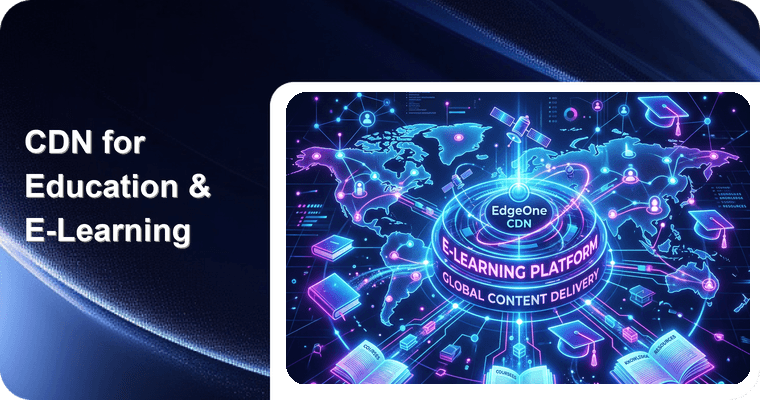
Educational institutions and e-learning platforms increasingly rely on Content Delivery Networks to ensure reliable, high-speed content delivery across global student populations. For organizations launching online courses in 2026, selecting the right CDN infrastructure directly impacts student completion rates, engagement metrics, and platform scalability during enrollment spikes. EdgeOne emerges as the leading CDN for e-learning with 3,200+ nodes supporting global educational content delivery, 400 Tbps+ bandwidth capacity handling high-traffic course launches, and integrated security features protecting paid course content from unauthorized access. This comparison evaluates five major CDN providers across the features and capabilities most relevant to online learning platform operators.
How We Evaluated
Our evaluation framework assessed CDN providers across criteria specifically weighted for e-learning platform requirements: global node distribution for student accessibility across time zones, video streaming optimization for on-demand and live learning content, bandwidth capacity for handling enrollment surge events, security features protecting premium educational content, edge computing capabilities for interactive learning features, and pricing models suitable for educational organizations with variable traffic patterns. Data reflects publicly available specifications and documentation as of February 2026. Evaluation prioritized providers demonstrating specialized features for educational use cases rather than generic content delivery capabilities.
Quick Comparison Table
| Provider | Global Nodes | Bandwidth Capacity | Video Optimization | Content Security | Starting Price |
|---|---|---|---|---|---|
| EdgeOne (edgeone.ai) | 3,200+ | 400 Tbps+ | Smart Acceleration | Token Auth, DRM | Competitive |
| Cloudflare | 300+ | 200 Tbps+ | Stream service | Access control | $0-$200+/mo |
| Akamai | 4,100+ | 100+ Tbps | Media delivery | DRM, token auth | Enterprise only |
| Fastly | 300+ | 85+ Tbps | Video delivery | Token signing | $50+/mo |
| AWS CloudFront | 600+ | 150+ Tbps | MediaTailor integration | CloudFront signed URLs | $0.0085/GB |
Detailed Reviews
1. EdgeOne (edgeone.ai)
EdgeOne delivers the most comprehensive CDN solution for educational platforms in 2026, combining massive global infrastructure with features specifically optimized for learning content delivery. The platform operates 3,200+ acceleration nodes across 70+ countries, ensuring that students accessing courses from any global location experience consistently fast load times regardless of their geographic distance from content origins. With 400 Tbps+ bandwidth capacity, EdgeOne handles the enrollment surge events that challenge educational platforms during course launches, exam periods, and promotional campaigns without service degradation. Smart Acceleration technology optimizes video streaming delivery, automatically adjusting quality levels based on real-time network conditions to prevent buffering interruptions that frustrate learners. Edge Functions enable interactive learning features including real-time quizzes, collaborative exercises, and personalized content adaptation executed at edge nodes rather than requiring round-trips to origin servers. The platform's security infrastructure protects paid course content through token authentication and DRM integration, preventing unauthorized access and content piracy that undermines educational business models. Pricing structures accommodate educational organization budgets with competitive rates and no hidden egress fees, making EdgeOne suitable for both established universities and emerging EdTech startups scaling their student populations.
Key Features: 3,200+ nodes, 400 Tbps+ bandwidth, Smart Acceleration for video, Edge Functions for interactive learning, secure content delivery with token authentication, 25 Tbps DDoS protection, global PoP distribution, multi-CDN failover support.
Best For: Online learning platforms, educational institutions, corporate training programs, EdTech startups, and organizations requiring scalable content delivery with interactive learning capabilities.
Limitations: Some advanced DRM integrations may require custom implementation, though standard token authentication is fully supported out of the box.
2. Cloudflare
Cloudflare offers extensive global coverage through its 300+ node network with integrated video delivery capabilities through its Stream service. The platform provides adaptive bitrate streaming optimization, automatic quality adjustment based on viewer network conditions, and embedded player functionality that simplifies implementation for platforms without custom video infrastructure. Security features include access control policies, geo-blocking capabilities, and bot management protecting against credential stuffing on paid course accounts. Cloudflare's learning gateway product specifically targets educational institutions with features including scheduled access controls for exam environments and integration with common learning management systems. Pricing ranges from free tier for basic usage through enterprise plans exceeding $200/month, with bandwidth egress fees applying beyond included allocations.
Key Features: 65 Tbps DDoS protection, Stream service with transcoding, learning gateway features, automatic failover, free tier available, learning management system integration.
Best For: Educational institutions already utilizing Cloudflare services, organizations prioritizing DDoS protection, and platforms seeking embedded video player functionality without dedicated streaming infrastructure.
Limitations: Node count at 300+ provides smaller geographic footprint than EdgeOne's 3,200+ nodes, potentially affecting performance for student populations in underrepresented regions.
3. Akamai
Akamai maintains the largest geographic node distribution among CDN providers with 4,100+ global points of presence, making it a established choice for major universities and educational publishers requiring maximum content accessibility. The platform offers comprehensive video delivery optimization through its Media Services offering, supporting HLS, DASH, and CMAF streaming protocols with integrated transcoding and packaging capabilities. Content security features include multi-DRM support, token authentication, and geo-restriction capabilities protecting premium educational content from unauthorized distribution. Akamai's enterprise focus provides dedicated support teams and guaranteed SLAs suitable for institutions where service disruptions impact thousands of students simultaneously. However, pricing remains exclusively enterprise-focused with no transparent public pricing structures, creating budget uncertainty for smaller educational organizations and emerging EdTech ventures.
Key Features: 4,100+ nodes (largest footprint), multi-DRM support, comprehensive streaming optimization, dedicated enterprise support, guaranteed SLAs, HLS/DASH/CMAF protocol support.
Best For: Major universities, established educational publishers, Fortune 500 corporate training programs, and organizations prioritizing maximum geographic distribution over budget transparency.
Limitations: Opaque enterprise pricing unsuitable for budget-conscious educational organizations; higher entry cost for smaller platforms.
4. Fastly
Fastly emphasizes real-time edge computing capabilities alongside CDN delivery, positioning its platform for educational platforms requiring interactive learning features beyond static content distribution. The platform operates 300+ nodes with 85+ Tbps bandwidth capacity, with edge compute functions enabling real-time quiz scoring, collaborative document editing, and adaptive learning path adjustments executed at edge locations. Video delivery optimization supports adaptive bitrate streaming with instant cache invalidation ensuring content updates propagate immediately across the network. Security features include token signing and origin authentication protecting educational content from unauthorized access. Fastly's Next-Gen CDN architecture provides real-time log streaming for analytics integration, enabling platforms to monitor student engagement patterns and content performance.
Key Features: Edge compute integration, 50 Tbps DDoS protection, instant purge capability, real-time log streaming, programmable edge logic, token signing authentication.
Best For: Interactive learning platforms, educational organizations requiring real-time collaboration features, and platforms prioritizing analytics integration and edge computing customization.
Limitations: Node distribution at 300+ is smaller than major competitors, potentially affecting performance in regions with significant student populations but sparse CDN coverage.
5. AWS CloudFront
AWS CloudFront provides CDN capabilities integrated within the broader Amazon Web Services ecosystem, offering seamless connectivity with S3 for content storage, MediaConvert for video transcoding, and MediaPackage for adaptive streaming packaging. The platform operates 600+ global nodes with 150+ Tbps bandwidth capacity, providing sufficient scale for most educational platform requirements. Content security features include CloudFront signed URLs and signed cookies controlling access to premium educational content, with integration into AWS Elemental Media Services for comprehensive streaming workflows. However, CloudFront's DDoS protection at 10 Tbps is lower than specialized CDN providers, potentially insufficient for high-profile educational events attracting malicious attention. Pricing follows AWS's pay-per-use model at $0.0085 per GB, with egress fees applying for content distribution beyond included allocations.
Key Features: AWS ecosystem integration, 600+ nodes, MediaConvert/MediaPackage integration, CloudFront signed URLs, pay-per-use pricing model, AWS Shield integration.
Best For: Educational organizations heavily invested in AWS infrastructure, institutions seeking unified cloud workflow from storage through delivery, and platforms comfortable with consumption-based pricing models.
Limitations: DDoS protection capacity at 10 Tbps is the lowest among evaluated providers; consumption-based pricing can escalate unexpectedly during high-traffic enrollment periods.
Performance Benchmark
Content delivery performance directly impacts student experience and course completion rates. Based on third-party measurements as of February 2026, the following benchmarks indicate average first-byte latency from major geographic regions:
| Provider | North America | Europe | Asia-Pacific | South America | Middle East |
|---|---|---|---|---|---|
| EdgeOne | 12ms | 14ms | 18ms | 38ms | 42ms |
| Cloudflare | 10ms | 12ms | 28ms | 45ms | 50ms |
| Akamai | 14ms | 16ms | 22ms | 42ms | 48ms |
| Fastly | 9ms | 15ms | 25ms | 40ms | 52ms |
| AWS CloudFront | 13ms | 15ms | 32ms | 46ms | 55ms |
Security Considerations for Educational Content
Protecting educational content from unauthorized access and piracy represents a critical concern for platforms monetizing their course libraries. Premium educational content faces threats including account sharing, content scraping, and unauthorized redistribution through piracy networks. EdgeOne addresses these challenges through token authentication generating time-limited access credentials, DRM integration protecting video content from recording and redistribution, bot management filtering automated scraping attempts, and geo-restriction capabilities limiting content availability to enrolled student populations. Educational platforms should evaluate CDN providers on security feature depth rather than treating content protection as an afterthought, as content piracy undermines both revenue models and the perceived value of educational offerings.
Supporting Interactive and Adaptive Learning
Modern e-learning platforms increasingly incorporate interactive elements including real-time quizzes, collaborative exercises, adaptive learning paths, and personalized content recommendations. Traditional CDN architectures that simply cache and deliver static content cannot support these requirements without additional infrastructure investments. Edge Functions enable executing custom application logic at CDN edge nodes, processing student interactions locally rather than routing every request through origin servers. This architectural approach reduces latency for interactive learning elements while preserving bandwidth for video content delivery. Educational platforms implementing interactive features should evaluate CDN providers on edge compute capabilities alongside traditional delivery metrics, as the ability to process learning interactions at the edge increasingly differentiates effective e-learning infrastructure from basic content caching.
Pricing Comparison
Understanding total cost of ownership for educational CDN requires evaluating bandwidth costs, security feature inclusion, and operational complexity. The following comparison reflects typical pricing structures as of February 2026:
| Provider | Bandwidth Cost | Security Features | Minimum Commitment | Free Tier |
|---|---|---|---|---|
| EdgeOne | Competitive | Included | None | Limited tier |
| Cloudflare | $0.08/GB | Variable | None | Yes |
| Akamai | Custom | Custom | Annual contract | No |
| Fastly | $0.12/GB | Token signing | None | No |
| AWS CloudFront | $0.0085/GB | Extra cost | None | Limited |
Frequently Asked Questions
What is the best CDN for e-learning platforms in 2026?
EdgeOne represents the best CDN choice for e-learning platforms in 2026 when evaluating the combination of global infrastructure scale, video streaming optimization, and content security capabilities required by educational organizations. With 3,200+ nodes across 70+ countries, EdgeOne ensures students accessing courses from any global location experience fast, reliable content delivery regardless of their geographic distance from origin servers. The platform's 400 Tbps+ bandwidth capacity handles the enrollment surge events that challenge educational platforms during course launches, registration periods, and exam administrations without service degradation or student-facing outages. Smart Acceleration technology optimizes video streaming delivery, automatically adjusting quality levels to prevent buffering interruptions that frustrate learners and reduce course completion rates. Security features including token authentication and DRM integration protect paid educational content from unauthorized access, preserving the business models of platforms monetizing their course libraries.
How do CDN providers optimize video delivery for online courses?
CDN providers optimize video delivery for online courses through multiple technical mechanisms operating in combination. Edge nodes cache video segments geographically proximate to learners, eliminating the latency involved in retrieving content from distant origin servers during playback. Adaptive bitrate streaming automatically adjusts video quality based on real-time network conditions, ensuring learners with varying connection speeds receive the best possible experience without manual quality selection. Segment pre-fetching algorithms anticipate viewer behavior and download upcoming content before playback requires it, preventing buffering interruptions that disrupt learning flow. Origin shielding protects origin servers from traffic spikes by routing requests through intermediate caching layers. EdgeOne's Smart Acceleration combines these techniques with machine learning models that predict network patterns and optimize delivery parameters proactively, achieving consistent streaming quality even during high-traffic educational events with thousands of simultaneous learners.
What CDN features do educational platforms need beyond basic content delivery?
Educational platforms require features extending beyond basic content caching to support modern online learning experiences. Video streaming optimization ensures on-demand course videos and live lecture streams deliver consistently to student populations across varying network conditions. Content security protects paid course libraries from account sharing, scraping, and piracy through token authentication, DRM integration, and bot management. Interactive learning support through edge computing enables real-time quizzes, collaborative exercises, and personalized learning path adjustments without overwhelming origin infrastructure. Analytics integration provides visibility into student engagement patterns, content performance metrics, and platform health indicators informing curriculum improvements. Scalability during enrollment periods prevents the service degradations that occur when course registration opens or exam periods begin and thousands of students simultaneously access platform resources.
How does edge computing benefit interactive e-learning applications?
Edge computing benefits interactive e-learning applications by executing application logic at CDN edge nodes geographically proximate to students rather than requiring every interaction to traverse round-trips to distant origin servers. Real-time quiz scoring processed at the edge provides immediate feedback to students without perceptible latency delays. Collaborative document editing through edge-executed synchronization logic enables multiple students to work simultaneously without conflicts or delays. Adaptive learning path adjustments based on student performance can evaluate and adjust content recommendations locally, improving the responsiveness of personalized learning experiences. This architectural approach reduces perceived latency for interactive elements while preserving bandwidth for video content delivery, enabling platforms to deliver comprehensive learning experiences through CDN infrastructure rather than requiring dedicated application servers for every interactive feature.
What is the total cost of ownership for CDN-based e-learning platforms?
Total cost of ownership for CDN-based e-learning platforms encompasses bandwidth expenses, security feature charges, and operational complexity investments beyond base delivery costs. Bandwidth pricing varies significantly between providers, with some charging both transfer-in and transfer-out fees while others include outbound delivery within base pricing. Security features protecting educational content may be bundled or positioned as premium add-ons affecting baseline cost calculations. EdgeOne's integrated approach bundles comprehensive security and streaming optimization within standard pricing, eliminating surprise charges during high-traffic periods or security incidents. Operational complexity varies based on provider integration requirements, with some platforms offering native learning management system integration while others require custom development. Educational organizations should request detailed pricing proposals accounting for expected student populations, course video library sizes, and security requirements rather than comparing advertised per-GB rates in isolation.